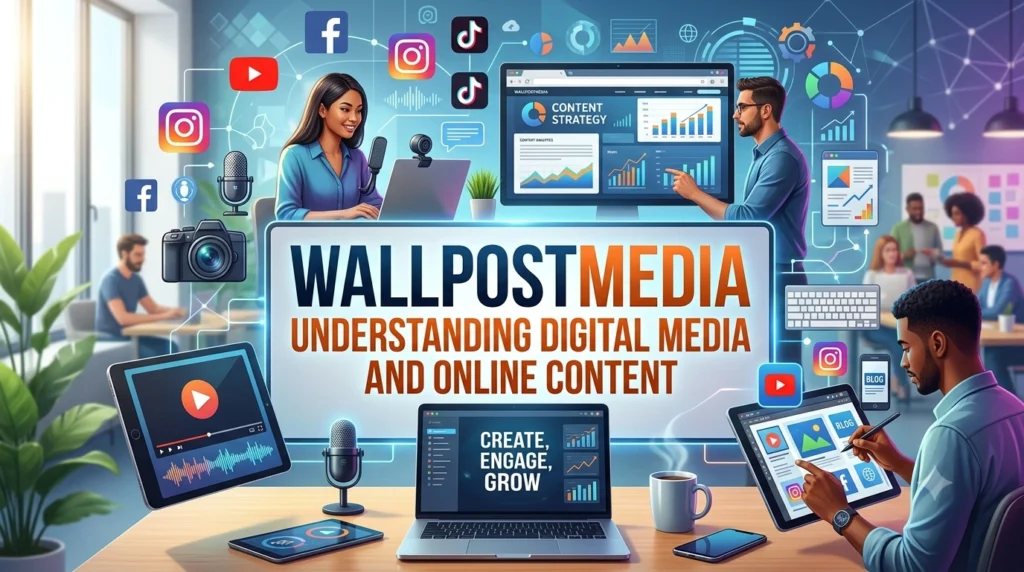
Wallpostmedia: Understanding Digital Media and Online Content
Introduction
The internet has transformed how people create, discover, share, and consume information. From social media posts and online articles to videos, podcasts, newsletters, and interactive experiences, digital content has become part of everyday communication.
Wallpostmedia can be explored within this wider digital-media landscape. A name associated with online publishing naturally raises questions about digital content, media trends, online communication, and the ways people interact with information on the internet.
This guide looks at the broader idea behind Wallpostmedia, explains how digital media works, and explores the major forms of online content that shape modern audiences. Whether you’re interested in digital publishing, content creation, online trends, or simply want to understand how internet media has evolved, this article provides a practical starting point.
What Is Wallpostmedia?
Wallpostmedia can be understood as a digital-media-oriented topic centered around online content and modern publishing.
The term fits naturally into a broader ecosystem that includes websites, blogs, social networks, digital publications, multimedia platforms, and other online communication channels.
Unlike traditional media, digital media isn’t limited to one format.
A modern digital-media platform can combine:
- Written articles
- Images
- Videos
- Social media content
- Infographics
- Podcasts
- Interactive content
- News and commentary
- Educational resources
- Brand content
This variety is one of the main reasons digital publishing has become such an important part of the internet.
How Digital Media Has Changed Content Consumption
People no longer have to wait for a newspaper, magazine, or scheduled television program to access information.
A smartphone or computer can provide immediate access to articles, videos, social posts, and other forms of content.
This has changed the relationship between publishers and audiences.
In traditional media, content was often delivered to a relatively passive audience. Digital platforms allow audiences to search, comment, share, react, subscribe, and participate.
The result is a much more interactive media environment.
The Main Types of Digital Content
Understanding digital media becomes easier when you break it into different content formats.
1. Articles and Blog Posts
Written content remains one of the most common forms of online publishing.
Articles can answer questions, explain complex subjects, provide opinions, report events, or teach readers how to do something.
2. Video Content
Video has become a major part of online communication.
It can be used for:
- Tutorials
- Entertainment
- Product demonstrations
- Interviews
- News
- Educational content
- Short-form social media
3. Social Media Content
Social platforms allow publishers and creators to communicate directly with audiences.
Posts may include text, images, short videos, polls, links, and other interactive formats.
4. Podcasts
Podcasts provide an audio-based format for interviews, discussions, storytelling, education, and entertainment.
5. Visual Content
Infographics, illustrations, photographs, charts, and other visual formats can communicate information quickly.
The best format depends on the audience and the purpose of the content.
Why Online Content Needs a Clear Purpose
Creating content simply because there is a platform to publish it isn’t enough.
Effective digital content should have a clear purpose.
For example, a piece of content might aim to:
- Answer a question
- Educate an audience
- Explain a trend
- Entertain readers
- Generate discussion
- Build brand awareness
- Encourage an action
- Provide practical guidance
Before creating an article or social post, it helps to ask:
Who is this for?
What problem does it solve?
What should the reader learn?
Why would someone want to share it?
These questions can help turn ordinary content into something more useful.
Wallpostmedia and the Importance of Digital Publishing
Digital publishing gives creators and organizations opportunities that weren’t available through traditional publishing alone.
A website can publish content continuously and make it available to readers across different locations.
Digital publishing also allows content to be connected.
For example:
Article → Related article → Video → Newsletter → Social media post
This creates a larger content ecosystem rather than treating every piece of content as an isolated publication.
For a digital-media concept such as Wallpostmedia, this interconnected approach is particularly relevant.
How Search Engines Influence Online Content
Search engines play a major role in helping people discover digital content.
Someone with a question may type a phrase into a search engine and receive articles, videos, images, forums, and other results.
This means publishers need to understand search intent.
Consider these examples:
| Search Intent | Example |
|---|---|
| Informational | What is digital media? |
| Educational | How does digital publishing work? |
| Comparative | Blog vs social media content |
| Commercial | Best content management tools |
| Navigational | Wallpostmedia website |
Understanding the reason behind a search helps content creators produce material that actually answers the user’s need.
The Role of SEO in Digital Media
Search engine optimization (SEO) helps online content become easier for search engines and users to understand.
Good SEO isn’t simply about repeating keywords.
A useful SEO strategy includes:
- Clear page titles
- Helpful headings
- Relevant keywords
- Descriptive URLs
- Internal linking
- Good page structure
- Useful original content
- Appropriate metadata
- Mobile-friendly experiences
The ultimate goal should be to create content that satisfies the reader while making the subject clear to search engines.
Social Media and Digital Content
Social media has changed how content travels across the internet.
A blog post published on a website can be promoted through social platforms. A short video can introduce people to a longer article. A discussion can lead to additional content.
This creates a cycle:
Create → Publish → Share → Discover → Discuss → Revisit
Social media can therefore function as both a communication channel and a discovery mechanism.
However, publishers shouldn’t assume that every platform works the same way.
Content that performs well as a short social post may not work equally well as a long-form article.
Why Visual Content Matters
People process information through multiple formats, and visual content can make complex ideas easier to understand.
For example:
A chart
Can simplify numerical information.
An infographic
Can summarize a complicated process.
A video
Can demonstrate a procedure.
A photograph
Can provide visual context.
An illustration
Can explain an abstract concept.
A strong digital-media strategy considers the format alongside the subject.
Digital Trends That Continue to Shape Online Experiences
Digital media continues to evolve.
Several developments are particularly relevant to publishers and content creators.
Artificial Intelligence
AI tools are increasingly being used for content research, editing, personalization, automation, and other digital workflows.
However, human review remains important, particularly when accuracy, originality, and expertise matter.
Short-Form Video
Short videos have become an important format across social platforms.
They can deliver an idea quickly and encourage viewers to explore additional content.
Personalized Experiences
Digital platforms can increasingly tailor content and recommendations based on user behavior and preferences.
Interactive Content
Quizzes, calculators, polls, interactive graphics, and other formats can make digital experiences more engaging.
How to Create Better Online Content
Whether you’re publishing for Wallpostmedia or another digital platform, a practical content process can make a significant difference.
Step 1: Identify the audience
Know who you’re writing for.
Step 2: Find the question
Understand what the audience wants to know.
Step 3: Research the subject
Use reliable sources and verify important information.
Step 4: Choose the right format
Decide whether the idea works best as an article, video, infographic, social post, or another format.
Step 5: Create useful content
Focus on answering the reader’s question rather than simply reaching a word count.
Step 6: Optimize for discovery
Use clear titles, headings, metadata, internal links, and relevant keywords.
Step 7: Review before publishing
Check facts, grammar, links, images, and formatting.
Step 8: Update when necessary
Time-sensitive content should be reviewed when information changes.
Digital Media vs Traditional Media
Digital media and traditional media serve many of the same fundamental purposes, but the experience can be very different.
| Feature | Digital Media | Traditional Media |
|---|---|---|
| Distribution | Internet-based | Physical or broadcast |
| Updates | Can be frequent | Often tied to publication schedules |
| Interaction | High | Generally more limited |
| Formats | Text, video, audio, interactive | Print, radio, television |
| Discovery | Search and social platforms | Direct readership/viewership |
| Global accessibility | Often broad | Depends on distribution |
This doesn’t mean one completely replaces the other.
Traditional media remains important, while digital media has created additional ways for people to access information.
Challenges Facing Digital Publishers
Digital publishing provides enormous opportunities, but it also creates challenges.
Information overload
There is an enormous amount of content available online, making it difficult for readers to identify the most useful information.
Misinformation
False or misleading information can spread quickly.
Short attention spans
Readers often scan content before deciding whether to continue.
Changing algorithms
Search and social platforms can change how content is discovered.
Trust
Publishers need to establish credibility through accuracy, transparency, and consistent quality.
These challenges make quality and trust increasingly important.
How Readers Can Become Better Digital Consumers
Digital literacy isn’t only useful for publishers.
Readers can also develop better habits.
Before trusting an online claim, consider:
- Who published it?
- When was it published?
- Does the article provide evidence?
- Can the claim be verified elsewhere?
- Is the headline more dramatic than the actual content?
- Is the article presenting facts, opinions, or advertising?
These simple checks can help people navigate the modern information environment more effectively.
Frequently Asked Questions
What is Wallpostmedia?
Wallpostmedia can be viewed as a digital-media-focused topic associated with online publishing, content, and modern internet experiences. The concept fits within the broader ecosystem of websites, digital publications, social media, multimedia, and online communication.
What is digital media?
Digital media refers to content distributed through digital devices and platforms. It can include articles, websites, videos, podcasts, images, social media posts, applications, and interactive experiences.
Why is digital content important?
Digital content helps organizations, publishers, creators, and individuals communicate with online audiences. It can educate, entertain, answer questions, build communities, and support broader digital experiences.
How does SEO help digital content?
SEO helps search engines understand online content and helps users discover relevant pages through search. Effective SEO combines useful content with clear structure, relevant keywords, descriptive metadata, internal linking, and good user experience.
What makes online content successful?
Useful content that clearly meets an audience’s needs is more valuable than content created only to attract clicks. Strong content should be accurate, relevant, readable, well-structured, and appropriate for its intended audience.
How is digital media different from traditional media?
Digital media is distributed through internet-connected digital platforms and can support interactive, frequently updated, multimedia experiences. Traditional media generally relies on formats such as print, radio, and television.
Final Thoughts
Wallpostmedia represents a useful entry point into the broader world of digital media and online publishing. From articles and social media posts to videos, podcasts, visual content, and interactive experiences, the modern internet provides countless ways to communicate.
But producing more content isn’t necessarily the answer.
The strongest digital experiences focus on relevance, accuracy, usefulness, clarity, and trust. Whether you’re a reader trying to find reliable information or a publisher trying to reach an audience, understanding these principles can make online communication more effective.
As digital platforms continue to evolve, the ability to create and evaluate useful content will remain an important part of navigating the internet.