
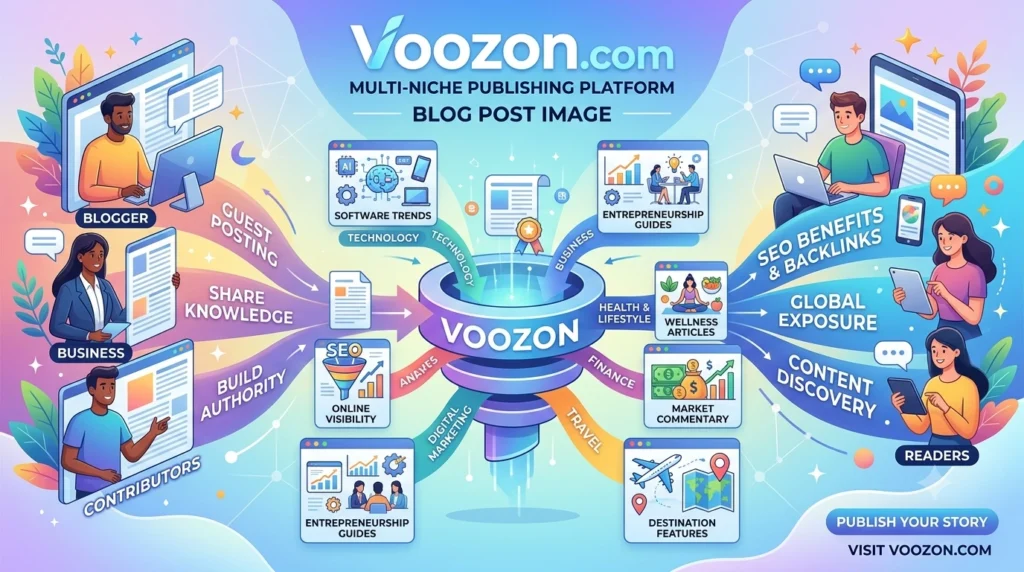
Voozon.com: What Users Should Know Before Using the Website
A decade ago, most people visited a handful of familiar websites every day. Today, the average internet user discovers new websites constantly through search engines, social media, newsletters, and AI-generated recommendations. That convenience comes with a challenge: how do you know whether a website is worth your time and trust?
If you’ve recently come across Voozon.com, you’re probably looking for answers about what the site offers and whether its content is reliable. Instead of focusing solely on appearances or search rankings, it’s smarter to evaluate the site’s quality, transparency, expertise, and user experience. This guide walks through the key factors that matter when assessing Voozon.com or any unfamiliar online platform.
Quick Summary
- Voozon.com appears to be an online content and publishing platform.
- Author expertise is a critical factor when evaluating content quality.
- Publication dates help determine whether information remains relevant.
- Reliable sources and references improve credibility.
- Transparency and ownership information are important trust signals.
- Website security contributes to user confidence.
- Content should be verified through multiple sources for important decisions.
- A professional design alone does not guarantee accurate information.
What Is Voozon.com?
Voozon.com appears to operate as a digital content platform that publishes informational articles and online resources. Like many websites competing for attention in search results, its primary goal is likely to provide answers, insights, or guidance on topics users actively search for.
The modern web contains millions of content-driven websites. Some focus on a specific niche such as technology, business, travel, health, or education. Others publish across several categories to attract broader audiences.
For readers, the exact niche is often less important than the quality of the information being presented. A website can have an impressive design and still publish weak content. On the other hand, a lesser-known platform may provide thoughtful, well-researched articles that genuinely help users.
That’s why evaluating the substance of the content matters more than judging the site by appearance alone.
Why Website Credibility Matters More Than Ever
The internet has made publishing easier than at any point in history.
Anyone with a domain name and hosting account can launch a website within hours. While this has democratized information sharing, it has also increased the amount of content that lacks proper research, expertise, or editorial oversight.
Consider how many people search online for:
- Financial advice
- Health information
- Product recommendations
- Career guidance
- Business strategies
Poor information in these areas can lead to costly mistakes.
Google’s E-E-A-T framework—Experience, Expertise, Authoritativeness, and Trustworthiness—has become one of the most widely discussed concepts in content quality. While it was developed for evaluating websites, the same principles are useful for readers trying to determine whether information deserves their trust.
Search Rankings Aren’t a Guarantee
Many users assume that a page appearing near the top of search results must be accurate.
In reality, search rankings reflect relevance and quality signals, but they do not guarantee that every statement within an article is correct. Search engines are powerful tools, yet they are not substitutes for critical thinking.
That’s why verifying information remains an essential skill.
How to Evaluate Content on Voozon.com
The most effective approach is to review individual articles rather than making assumptions about the website as a whole.
A few simple checks can provide valuable insight.
Check the Author’s Expertise
One of the first things experienced researchers look for is authorship.
Ask yourself:
- Is the author clearly identified?
- Does the author have relevant expertise?
- Is there a professional biography?
- Have they written about similar topics before?
For example, an article discussing digital marketing carries more credibility when written by someone with real-world marketing experience rather than an anonymous contributor.
Expertise doesn’t automatically guarantee accuracy, but it helps establish context.
Review Publication and Update Dates
Information changes quickly.
Technology evolves. Industry standards shift. Software updates alter best practices.
Before relying on an article, check:
- Original publication date
- Most recent update date
- Relevance of examples
- Current accuracy of recommendations
An article that was useful several years ago may no longer reflect current realities.
Evaluate Content Depth
Strong content usually provides more than basic definitions.
High-quality articles often include:
- Practical examples
- Real-world applications
- Supporting evidence
- Clear explanations
- Balanced viewpoints
Articles that make bold claims without evidence deserve extra scrutiny.
Does Voozon.com Use Reliable Sources?
One of the easiest ways to evaluate credibility is by examining the sources behind the information.
Imagine reading a business article that claims a specific strategy guarantees success. Without evidence, it’s difficult to determine whether the advice is trustworthy.
The situation changes when the article references research, industry reports, case studies, or official documentation.
Reliable Sources Often Include
- Government publications
- Academic studies
- Industry research reports
- Official company resources
- Recognized experts
Quality content generally allows readers to verify information independently.
Why Cross-Checking Matters
Professional journalists, researchers, and analysts rarely rely on a single source.
If an article discusses:
- Investments
- Health topics
- Legal issues
- Educational decisions
- Business planning
It’s wise to compare the information with at least two additional authoritative sources.
That extra step can prevent misunderstandings and improve decision-making.
What Trust Signals Should Users Look For?
Content quality matters, but website-level trust signals can also reveal a great deal about professionalism.
Transparency and Accountability
Trustworthy websites generally make it easy to identify who operates them.
Look for:
- About pages
- Contact information
- Editorial guidelines
- Privacy policies
- Terms of service
Transparency doesn’t automatically prove credibility, but it demonstrates accountability.
Website Security
Security is another important factor.
Positive signs include:
- HTTPS encryption
- Secure browsing environment
- Privacy disclosures
- Responsible data handling practices
Security features protect users and contribute to a professional online experience.
Consistency Across the Site
A single article rarely tells the whole story.
Browse several pages and ask:
- Is the writing quality consistent?
- Are articles organized logically?
- Do claims appear supported?
- Is information presented clearly?
Patterns often reveal more than isolated examples.
How User Experience Reflects Quality
User experience and editorial quality often go hand in hand.
A website that invests in usability frequently demonstrates similar attention to content management.
Positive Indicators
Well-maintained websites often feature:
- Fast loading speeds
- Mobile-friendly layouts
- Clear navigation
- Readable formatting
- Organized categories
These factors improve the user experience and suggest ongoing maintenance.
Potential Warning Signs
Be cautious if you notice:
- Excessive advertising
- Misleading navigation
- Clickbait headlines
- Broken links
- Frequent grammatical errors
One issue may not be significant, but multiple issues can indicate weaker quality standards.
Key Takeaways
When evaluating Voozon.com, keep these points in mind:
- Verify author credentials and expertise.
- Check publication and update dates.
- Review supporting sources and references.
- Assess transparency and ownership details.
- Confirm website security standards.
- Evaluate content quality across multiple articles.
- Cross-check important information elsewhere.
- Avoid relying on a single source for major decisions.
Frequently Asked Questions
Is Voozon.com a trustworthy website?
The reliability of Voozon.com depends on the quality of individual articles, author expertise, supporting evidence, and editorial standards. Readers should evaluate content carefully before relying on it.
What should I check first on Voozon.com?
Start with the author profile, publication date, and cited sources. These elements often provide the fastest insight into content credibility and relevance.
Can I use Voozon.com as a research source?
It can serve as a useful starting point for exploring a topic, but important information should always be verified using multiple authoritative sources.
How do I know if an article is reliable?
Look for expert authorship, supporting evidence, updated information, transparent sourcing, and balanced discussion. Reliable content generally provides context rather than unsupported claims.
Conclusion
Voozon.com should be evaluated using the same standards you would apply to any unfamiliar online resource. Instead of relying solely on search rankings or design quality, focus on expertise, transparency, evidence, and content accuracy. The most informed readers don’t look for a single perfect source—they compare information, verify claims, and build understanding from multiple trustworthy references. That approach remains the best defense against misinformation and poor advice online.