
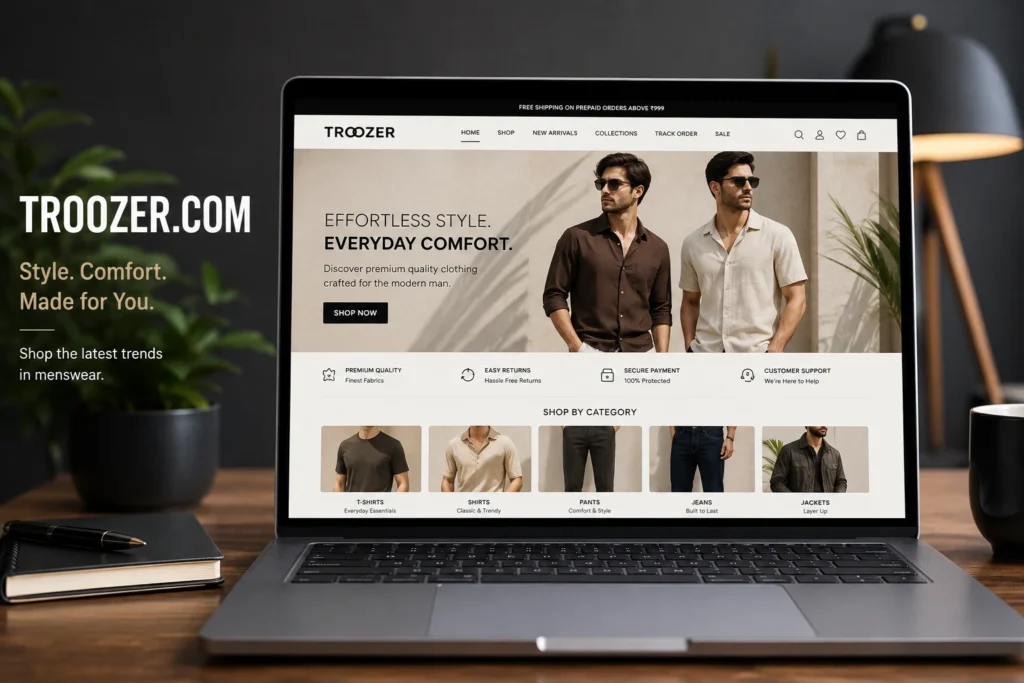
Troozer.com: What Users Should Know Before Trusting the Website
Imagine searching Google for a solution to a problem, clicking the first promising result, and immediately finding an article that seems to have all the answers. Most people would read it and move on. Experienced internet users, however, usually ask a different question: Who created this information, and how reliable is it?
That question matters when visiting websites like Troozer.com. Whether you’re looking for information, researching a topic, or comparing resources, understanding how to evaluate a website can help you separate useful insights from unsupported claims. Rather than relying on appearances alone, it’s worth examining content quality, transparency, expertise, and trust signals before accepting information as accurate.
Quick Summary
- Troozer.com appears to function as an online publishing and content platform.
- Author expertise is an important credibility factor.
- Publication dates help determine content relevance.
- Reliable sources and references strengthen trustworthiness.
- Website transparency often reflects editorial quality.
- Security and usability provide additional trust signals.
- Important claims should always be verified independently.
- No single website should be your only source for critical information.
What Is Troozer.com?
Troozer.com appears to be a content-driven website designed to publish informational articles across one or more categories. Like many modern digital platforms, its goal is likely to provide readers with guides, explanations, opinions, or educational resources that answer common online search queries.
The modern internet is filled with websites serving different audiences. Some focus on highly specialized industries such as technology, finance, health, or marketing. Others cover a broader range of subjects to attract readers with diverse interests.
The website’s topic focus is only part of the picture. What truly matters is whether the content demonstrates expertise, accuracy, and reliability.
A polished website doesn’t automatically guarantee quality information. Likewise, a lesser-known website can sometimes publish highly useful and well-researched content. That’s why evaluating the content itself is so important.
Why Website Credibility Matters More Than Ever
The internet has created unprecedented access to information. At the same time, it has lowered the barrier to publishing.
Today, anyone can create a website, write articles, and share opinions with a global audience. While this openness is valuable, it also means readers need stronger evaluation skills.
Consider topics such as:
- Personal finance
- Health advice
- Career planning
- Technology recommendations
- Business strategies
Poor information in these areas can lead to costly mistakes.
Google increasingly emphasizes Experience, Expertise, Authoritativeness, and Trustworthiness (E-E-A-T) when evaluating content quality. Readers can benefit from applying the same principles when deciding whether to trust a website.
Search Rankings Are Not Proof of Accuracy
A common myth is that websites ranking highly in search results must be completely reliable.
Search engines are extremely effective at identifying relevant content, but ranking positions alone don’t guarantee factual accuracy. That’s why users should always verify important information independently.
How to Evaluate Content on Troozer.com
Instead of asking whether an entire website is trustworthy, evaluate the specific article you’re reading.
This approach is more practical and often more accurate.
Check the Author Profile
The first step is identifying who wrote the content.
Look for:
- Author names
- Professional biographies
- Industry experience
- Relevant credentials
- Previous publications
For example, a marketing article written by an experienced SEO consultant carries more weight than anonymous content with no visible expertise.
While credentials don’t automatically guarantee quality, they help readers understand the author’s background.
Review Publication Dates
Content freshness matters.
Technology changes quickly. Search engine algorithms evolve. Software platforms release updates. Business trends shift.
Before relying on information, check:
- Publication date
- Last updated date
- Current relevance of examples
- Accuracy of referenced tools
A guide that was highly useful a few years ago may no longer reflect current best practices.
Assess Content Depth
Quality content usually goes beyond surface-level explanations.
Strong articles often include:
- Practical examples
- Clear context
- Supporting evidence
- Detailed explanations
- Actionable insights
Shallow content tends to make broad claims without providing proof or meaningful analysis.
Does Troozer.com Use Reliable Sources?
One of the strongest indicators of credibility is the quality of sources used to support claims.
Imagine reading an article that promises dramatic business growth through a single strategy. Without evidence, it’s simply an opinion.
When the same article includes data, case studies, research, or expert analysis, readers have a stronger basis for evaluating the recommendation.
Valuable Sources Often Include
- Government publications
- Academic studies
- Industry reports
- Official documentation
- Recognized experts
Reliable content generally allows readers to verify claims independently.
Cross-Check Important Information
Professional researchers rarely trust a single source.
If an article discusses:
- Investments
- Medical information
- Legal matters
- Education decisions
- Business planning
Verify the information using at least two additional authoritative sources.
This simple habit significantly reduces the risk of relying on inaccurate advice.
What Trust Signals Should You Look For?
Credibility extends beyond the article itself.
Several website-level signals can help users assess professionalism and accountability.
Transparency Matters
Trustworthy websites typically make ownership information easy to find.
Look for:
- About pages
- Contact information
- Editorial policies
- Privacy policies
- Terms of service
When a website is transparent about who operates it and how content is produced, readers can make more informed judgments.
Website Security
Security is another important consideration.
Positive indicators include:
- HTTPS encryption
- Secure browsing environment
- Clear privacy disclosures
- Responsible data practices
Security alone doesn’t prove content quality, but it does indicate a baseline level of professionalism.
Consistency Across Multiple Articles
Browse several articles rather than evaluating a website based on a single page.
Ask yourself:
- Is the writing quality consistent?
- Are articles logically organized?
- Are claims supported with evidence?
- Does the site maintain editorial standards?
Patterns often reveal more than individual examples.
How User Experience Reflects Website Quality
User experience and content quality are frequently connected.
A website that invests in maintaining a positive experience often demonstrates similar care in managing its content.
Positive Signs
Indicators of a well-maintained website include:
- Fast loading pages
- Mobile responsiveness
- Easy navigation
- Clean formatting
- Logical category structure
These factors improve usability and suggest ongoing site management.
Potential Warning Signs
Users should be cautious when encountering:
- Excessive advertisements
- Clickbait headlines
- Broken links
- Misleading buttons
- Frequent grammatical errors
One issue may not be significant. Multiple issues together can indicate weaker quality control.
Key Takeaways
If you’re evaluating Troozer.com, focus on these important factors:
- Verify author expertise and credentials.
- Check publication and update dates.
- Examine sources and supporting evidence.
- Review transparency and ownership information.
- Confirm website security standards.
- Assess content quality across multiple pages.
- Cross-check important claims with authoritative sources.
- Avoid relying on a single website for major decisions.
Frequently Asked Questions
Is Troozer.com a reliable website?
The reliability of Troozer.com depends on the quality of individual articles, author expertise, supporting sources, and editorial practices. Readers should evaluate content carefully before relying on it.
What should I check first on Troozer.com?
Start by reviewing author information, publication dates, and cited references. These elements provide a quick indication of content quality and credibility.
Can I use Troozer.com for research?
Troozer.com may serve as a useful starting point for research, but important information should be verified through additional authoritative sources before making decisions.
How can I determine if an article is trustworthy?
Look for expert authorship, supporting evidence, current information, transparent sourcing, and balanced discussion. Reliable articles typically provide context and avoid unsupported claims.
Conclusion
Troozer.com should be evaluated using the same standards you would apply to any unfamiliar online resource. Rather than trusting a website based solely on appearance or search rankings, examine the expertise behind the content, the evidence supporting claims, and the transparency of the publishing process. Developing these habits helps readers make better decisions and navigate online information with greater confidence.